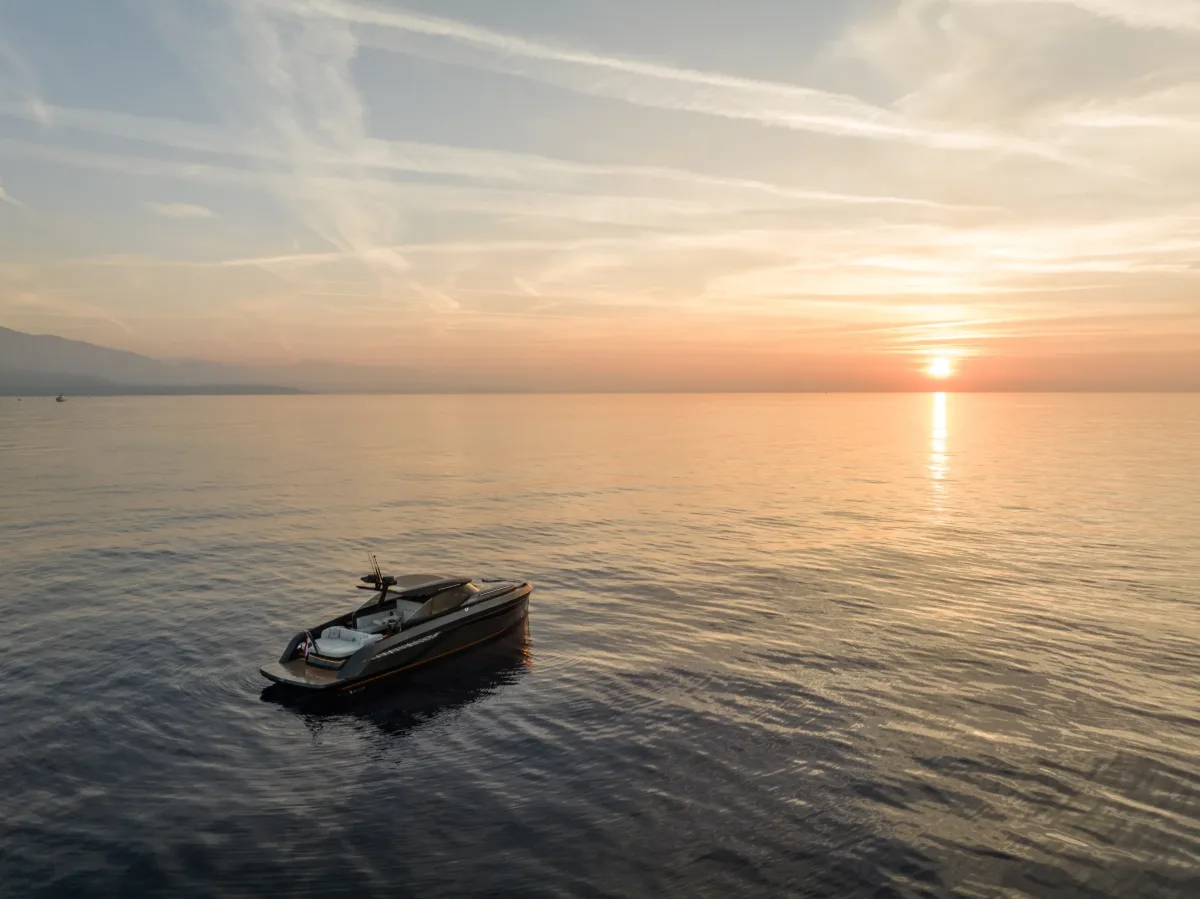

Day cruiser, walk-around or express cruiser: yacht types explained
 By Leon Bekkers, founder
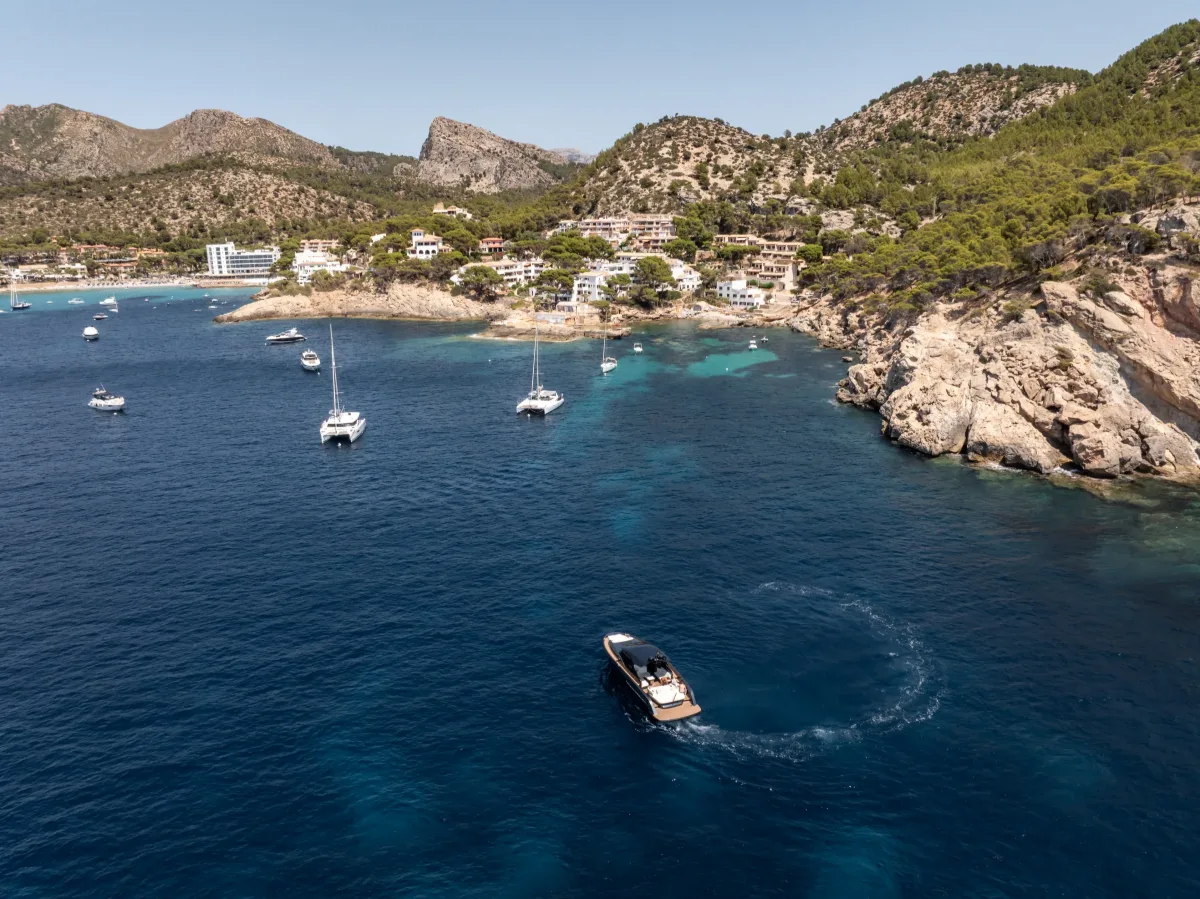
A day cruiser is designed for long days on the water and easy returns to port. An express cruiser is a fast, low-profile motor yacht with the helm in the cockpit and cabins below, built to cover distance quickly. A walk-around is defined by its deck layout: side decks that let you walk safely from the cockpit to the bow. In the Bekkers range, the Beachclub 40 is a day yacht, the AZUR 45HT sits in express territory, and the 18.7 m Carib 64HT is a walk-around hardtop.
These terms are used loosely in the market, and many yachts combine features. This guide explains what each label typically means, so you can read a brochure or listing with confidence.
Why yacht type labels are confusing
Builders and brokers use type names partly to describe a boat and partly to sell a feeling. "Day cruiser", "dayboat", "day yacht", "sport cruiser", "express", "open", "walk-around", "weekender": several of these overlap, and some describe different things entirely.
It helps to separate three questions:
- 01Use: is the boat built for the day, or for nights on board?
- 02Profile: is it open, or does it have a hardtop?
- 03Deck layout: can you walk around the superstructure, and how?
A label usually answers one of these questions, rarely all three. If you want to go deeper on the first question, our article on day cruiser vs weekender covers it in detail. Here we focus on what the type names mean.
Day cruiser
A day cruiser, or day yacht, is built around the hours between breakfast and sunset. The emphasis is on deck space: sun beds, lounge seating, a table for lunch, easy swimming access and good storage for toys and towels.
Below deck, a day cruiser typically has a modest cabin, a toilet and somewhere to change. It is not designed for long stays aboard, although an occasional night may be possible.
Day cruisers are often open, sometimes with a bimini or T-top for shade. They tend to be relatively light and quick, and many are used as tenders to larger yachts. For that use, see our article on the superyacht chase tender.
Express cruiser
The term express cruiser, also called a sport cruiser, typically describes a fast motor yacht with a sleek, low profile. The helm is on the main deck in the cockpit, not on a flybridge. There is a single main deck level outside, with cabins and a bathroom below, usually towards the bow.
Key traits of a typical express cruiser:
- Speed is part of the identity, often planing hulls with strong twin engines.
- One deck level outside, which keeps the social space together around the helm.
- Overnight comfort below, with one or more cabins.
- Open or hardtop, depending on the model and the climate it is built for.
Access to the bow on an express cruiser varies. On some it is via steps through the windscreen or narrow side decks, which is why the walk-around exists as a separate idea.
Walk-around
Walk-around describes the deck layout, not the use. A walk-around has side decks wide and well protected enough to walk comfortably from the cockpit to the foredeck, around the cabin or superstructure. Typically there are higher bulwarks or rails and good handholds along the way.
The benefits are practical:
- Safer movement around the boat, also for children and guests.
- Easier mooring, as crew can reach bow and stern lines quickly.
- More use of the foredeck, for sunbathing or an extra seating area.
The trade-off is that wider side decks take space from the interior or the cockpit. That is why walk-around layouts are more common on larger yachts, where there is room for both.
Hardtop, open and other common terms
Open
An open yacht has no fixed roof over the helm. Shade, if any, comes from a bimini or awning. Open yachts offer the most sun and sky.
Hardtop (HT)
A hardtop is a fixed roof over the helm and cockpit, often with sliding or glazed sections. It gives shelter from wind and rain and permanent shade. For how this choice plays out in northern Europe, read hardtop or open yacht.
Weekender
A weekender is a yacht with enough comfort below for a few nights aboard: proper cabins, a bathroom with shower, headroom and usually a galley.
Beach club
A beach club is an area at the stern, at or near water level, that opens up as a terrace for swimming and relaxing. On smaller yachts this is often created with fold-out platforms or wings. See what is a beach club yacht.
Where the Bekkers range fits
All Bekkers yachts are hand-built in aluminium at the yard in Heusden. Here is how each model maps onto the labels above.
| Model | Length | Type | Profile | Overnight |
|---|---|---|---|---|
| Beachclub 40 | 40 ft | Day yacht with beach club wings | Open | Ask the yard |
| AZUR 45HT | 13.5 m / 44.29 ft | Express-style hardtop weekender | Aluminium hardtop | 2 cabins, 1 bathroom |
| Carib 64HT | 18.7 m / 61.35 ft | Walk-around hardtop family weekender | Hardtop | 3 cabins, 3 bathrooms |
Beachclub 40: the day yacht
The Beachclub 40 is a 40-foot aluminium day yacht with optional beach club wings that create a terrace at water level. It is built for swimming, lunch at anchor and long days in the sun. Prices start from EUR 998,000 excl. VAT and engines, with outboard (Mercury V12-600) and inboard Volvo Penta IPS options to discuss with the yard. More in Beachclub 40 vs AZUR 45.
AZUR 45HT: the hardtop weekender
The AZUR 45HT combines a fast hard chine hull with real overnight comfort: 2 cabins, a bathroom with shower cabin, and 2 m standing headroom. With 2x Volvo Penta IPS 600 as the entry engine package and options up to IPS 800, it reaches 30+ knots depending on engines. The aluminium hardtop can be fitted with a panoramic sliding roof. Prices start from EUR 1,359,500 excl. VAT and engines (2026). See the AZUR 45HT.
Carib 64HT: the walk-around flagship
The Carib 64HT is our flagship, currently in build. At 18.7 m, with a 5.4 m beam, it has the space for a true walk-around hardtop layout, three large cabins and three bathrooms. It is a family weekender with Volvo Penta D13 engines and a speed of 25 knots. Read more about the Carib 64HT.
How to choose the right type
Start with how you will use the yacht, not with the label. Ask yourself:
- How many nights a year do you expect to sleep aboard?
- How many guests are usually with you?
- Do you cruise in the north, the Mediterranean, or both?
- Will the boat also serve as a tender to a larger yacht?
The answers will usually point to one or two types. From there, the best step is to see the yachts in person. You can compare the models side by side, or book a sea trial at the yard.
Frequently asked questions
What is the difference between a day cruiser and an express cruiser?
A day cruiser is focused on deck life during the day, with limited accommodation below. An express cruiser is typically a fast yacht with the helm in the cockpit and proper cabins below for overnight stays. Many modern yachts sit somewhere between the two.
What does walk-around mean on a yacht?
Walk-around refers to side decks that let you walk safely from the cockpit to the bow around the superstructure. It makes mooring easier and the foredeck more usable. On the Bekkers range, the Carib 64HT is a walk-around hardtop.
Is the AZUR 45HT a day cruiser or a weekender?
The AZUR 45HT is a weekender. It has 2 cabins, a bathroom with shower cabin and 2 m standing headroom, while keeping the deck spaces of a day yacht, including two sun beds and an outdoor galley.
Which Bekkers yacht is best for days at anchor?
The Beachclub 40 is built for that, with optional beach club wings that form a terrace at water level.
What does HT mean in a yacht name?
HT stands for hardtop: a fixed roof over the helm and cockpit. In the Bekkers range, the AZUR 45HT and Carib 64HT both have a hardtop.