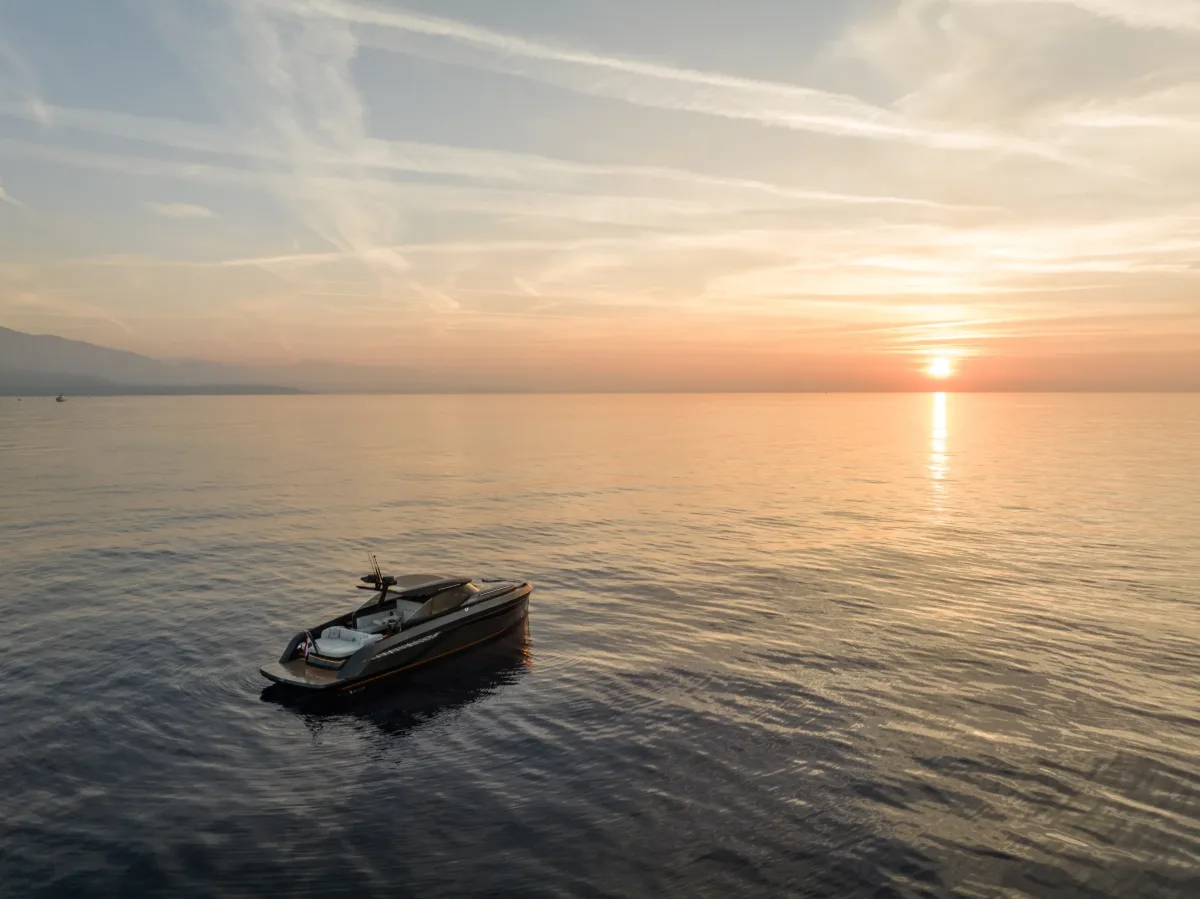


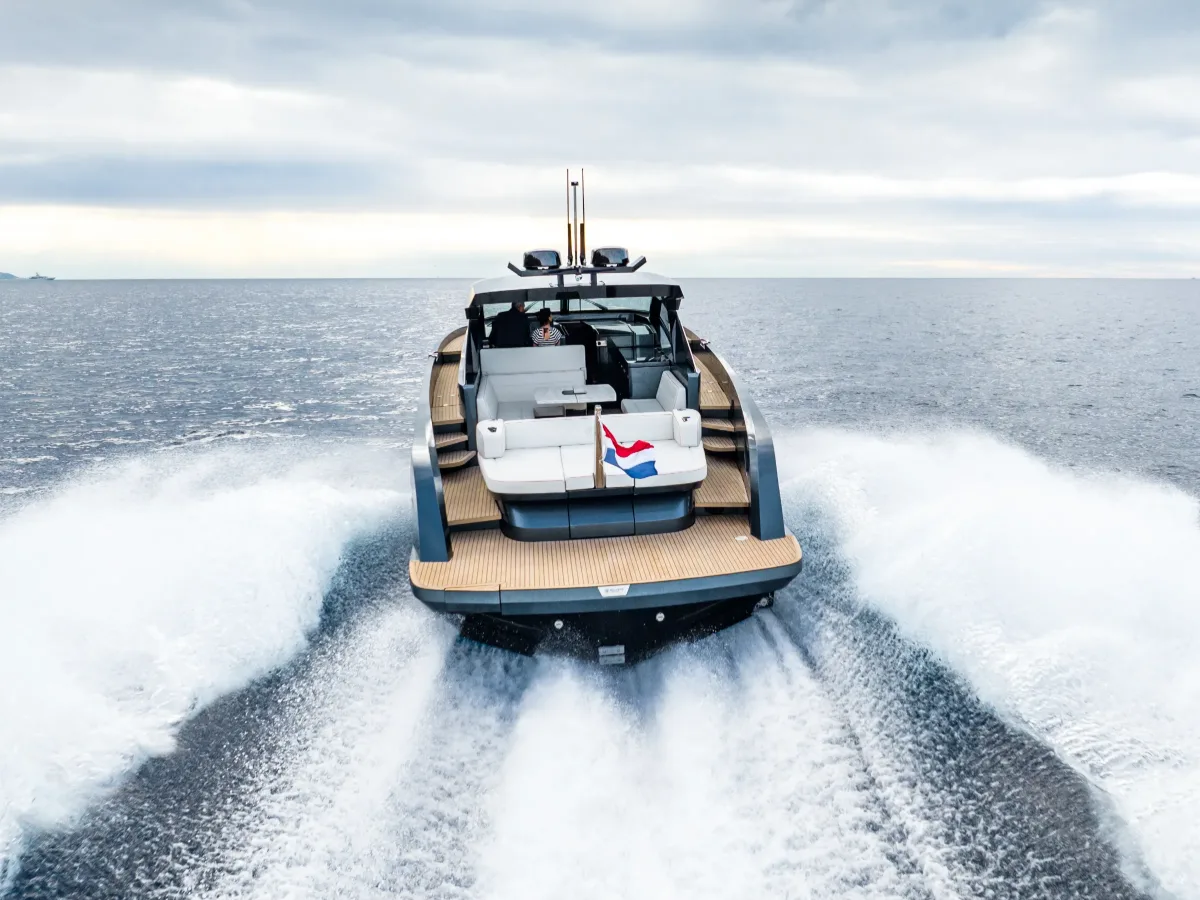
Pod drives and shaft drives are two ways of turning engine power into thrust. A shaft drive is the traditional setup: engine, straight shaft, propeller and rudder. A pod drive combines propulsion and steering in one unit under the hull. On a 40 to 50 ft day yacht like the AZUR 45HT, which runs on twin Volvo Penta IPS pods, pods typically bring easier handling and more interior space. Shaft drives remain a proven, robust choice, especially on larger and heavier yachts.
Below we explain how each system works and what it means for owners.
How a shaft drive works
In a shaft installation, the engine sits inside the hull, usually towards the middle of the boat. A long propeller shaft runs at an angle through the bottom of the hull to a fixed propeller. Steering comes from a rudder behind the propeller.
This is the oldest and most widely used setup for inboard yachts. It is mechanically simple and well understood by yards and engineers worldwide. Parts and expertise are easy to find in most harbours.
Typical characteristics of a shaft drive:
- Proven, robust technology with a long service history.
- Engines placed further forward, which can help weight distribution on some hulls.
- Steering through rudders, which means slower response at low speed.
- Close quarters manoeuvring relies on gear changes, throttle and often a bow thruster.
- Shaft, propeller and rudder all sit below the hull and add to draught.
How a pod drive works
A pod drive is a self-contained drive unit that hangs below the hull and can rotate to steer. The engine sits directly in front of it, low and towards the stern. Volvo Penta IPS, the system used on the AZUR 45, uses forward-facing, counter-rotating twin propellers on each pod. The propellers pull the boat through the water rather than push it.
Because each pod can turn independently, the helm can control them together with a joystick. This allows the boat to move sideways, rotate on the spot and, on systems that offer it, hold position automatically.
Typical characteristics of a pod drive:
- Very precise low speed handling with joystick control.
- Engines and drives placed aft, freeing space in the middle of the boat for cabins and storage.
- Thrust aligned horizontally, which is generally considered efficient at planing speeds.
- A more integrated, electronically controlled system with specific service requirements.
Side by side
| Aspect | Shaft drive | Pod drive (e.g. Volvo Penta IPS) |
|---|---|---|
| Steering | Rudder | Steerable drive unit |
| Low speed control | Throttle, gears, often bow thruster | Joystick, sideways and rotating movement |
| Engine position | Typically mid or forward of stern | Aft, directly above the drives |
| Interior space | Engine room takes central volume | More usable space amidships |
| Efficiency | Depends on shaft angle and hull | Typically efficient at planing speeds |
| Maintenance | Shaft seal, bearings, alignment, rudder | Drive oil, seals and anodes per manufacturer schedule |
| Expertise | Widely available | Needs dealers trained on the system |
Handling: the difference you feel first
The clearest difference shows up in the harbour. With shafts and rudders, docking a 45 ft yacht in a crosswind takes skill and practice. With pods and a joystick, many owners find they can berth the boat calmly on their own. For owners who helm themselves, without a captain, this is often the deciding factor.
At speed, both systems can deliver excellent handling when matched to a good hull. Pods tend to turn with a flatter, more controlled feel, because the whole drive steers rather than a rudder deflecting water. Shaft driven boats often feel very stable and predictable at cruising speed, which many experienced helms appreciate.
The best way to judge is to try both. Our sea trial checklist explains what to test.
Space and layout
Pod drives let designers move the engines aft. On a weekender, that freed space goes into the living area. On the AZUR 45HT, this layout helps fit two cabins, a bathroom with shower cabin and 2 m standing headroom into a 13.5 m hull, alongside an outdoor galley and sun beds fore and aft.
On a shaft driven yacht, the engine room typically sits further forward. Good designers work around this, but it does shape the layout.
Efficiency and fuel
Pod drives are often described as more efficient than shaft drives at planing speeds, because the thrust is horizontal and the propellers work in cleaner water. The real difference depends on the hull, the installation and how you use the boat. We do not quote general percentages, because they vary too much between yachts. For running costs on our own range, ask the yard for figures based on your configuration, and read our guide to yacht running costs.
Maintenance and robustness
Both systems need regular servicing. Shaft drives involve checks on the shaft seal, bearings, alignment and rudder. Pod drives need servicing in line with the manufacturer's schedule, typically including drive oil, seals and anodes, carried out by trained technicians. Volvo Penta has a broad dealer and service network, which matters if you cruise across several countries. On an aluminium yacht, correct anode protection is important with either system. See our guide to aluminium yacht maintenance.
What about the Carib 64HT?
The Carib 64HT, our 18.7 m flagship, uses Volvo Penta D13 engines and reaches 25 knots, with a maximum displacement of 37 t. In the wider market, D13 engines are used in both shaft and pod installations. The drive configuration of the Carib 64HT is best discussed directly with the yard, which will explain the choice and any options in your quote.
And outboards?
For smaller day yachts there is a third option: outboard engines. The Beachclub 40 has been discussed with a Mercury V12-600 outboard option as an alternative to inboard Volvo Penta IPS. Outboards bring their own trade-offs in space, noise and maintenance. Read our comparison of outboard and inboard yachts for more.
Frequently asked questions
Are pod drives better than shaft drives?
Not in every case. Pods typically offer easier low speed handling and more interior space, while shaft drives are simple, robust and widely supported. The right choice depends on the hull, the size of the yacht and how you plan to use it.
Which drive system does the AZUR 45 use?
The AZUR 45HT uses twin Volvo Penta IPS pod drives. IPS 600 (2x 440 hp) is the entry package, with IPS 650 and IPS 800 available as options. Speed is 30+ knots depending on the engines.
Are pod drives harder to maintain?
Pod drives need servicing by technicians trained on the system, following the manufacturer's schedule. They are not necessarily more work, but they are more specialised. Ask the yard about service arrangements in your cruising area.
Can I dock a yacht with pod drives on my own?
Many owners find joystick control makes solo docking much easier. You still need practice and a good understanding of wind and current. A sea trial is the best way to try it.
Does the drive system affect draught?
Yes. Both pods and shafts sit below the hull and add to the draught. The AZUR 45HT has a draught of 0.79 m, and the Carib 64HT a draught of 1.0 m.