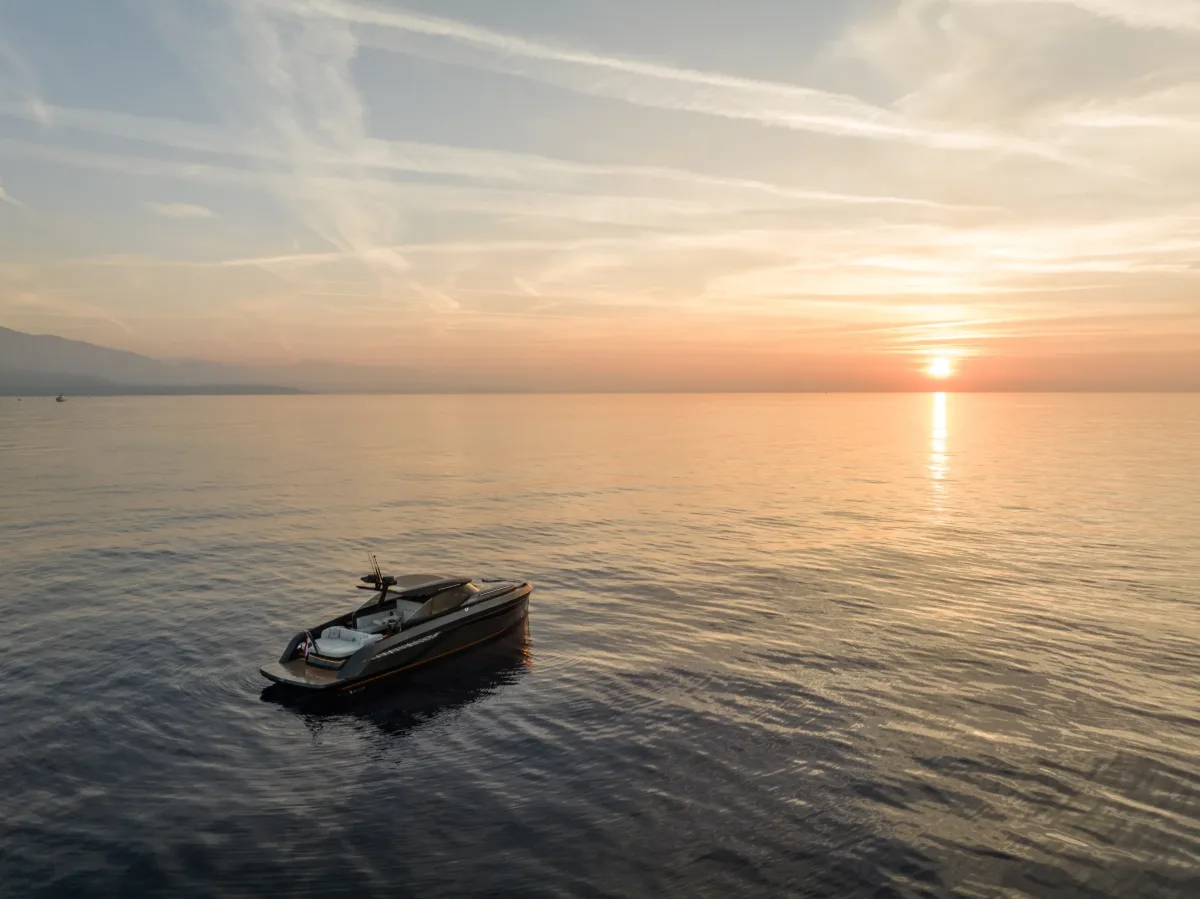


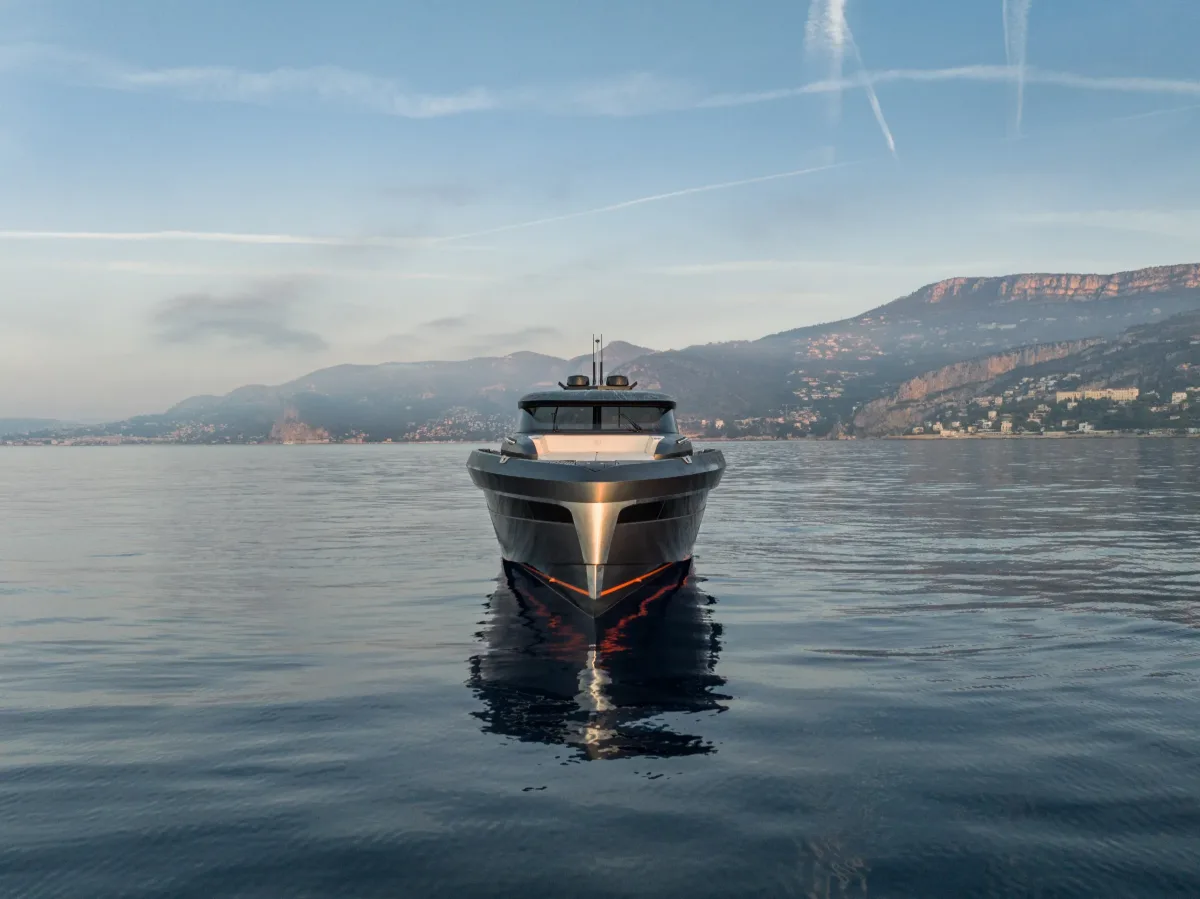
Paint to sample means your yacht is painted in a colour matched to a sample you choose, not picked from a short list. At Bekkers Yachts any colour combination is possible, from Daytona Grey and Dark Green to Navy Blue and Ice Blue. The colour is typically agreed through a physical reference, test panels and a final approval in daylight before the hull is painted.
Why paint to sample is possible on an aluminium yacht
On most production yachts in GRP, the colour of the hull comes from the gelcoat laid into the mould. Builders typically offer a small range of hull colours, sometimes with a painted option at extra cost. The mould and the production line set the limits.
A Bekkers yacht has no mould and no fibreglass hull. The hull and superstructure are welded aluminium, faired and then painted, in a way that is similar to how superyachts are finished. Paint is part of the process from the start, so colour is a design choice rather than an exception. That fits the yard's philosophy: no mass production, no fibreglass hull, no restrictions.
Where a colour starts
Owners come with very different starting points. Some typical ones:
- A car. A favourite car colour is a common reference. Daytona Grey is one of the example colours for the AZUR 45.
- A superyacht. For a chase tender, the brief is usually to match the mothership's livery, often from the yacht's own paint specification.
- A place or material. A stone, a fabric, a piece of wood or a photograph of a harbour at a certain time of day.
- A heritage shade. A classic deep green or navy that suits the lines of the boat.
Any of these can work. What matters is that the reference is physical, or precisely specified, so it can be measured and matched.
How the process typically works
The exact steps vary per yacht and per paint system. The yard will explain its own process when you discuss your colour. In general terms, choosing a custom hull colour typically follows this order.
1. Brief and reference
You share the colour idea and any reference you have. The yard and the designer discuss how it will look on the hull, on the superstructure and against the deck. René van der Velden, the exterior designer of the Bekkers range, shapes the lines that the colour will sit on, so the conversation often covers where a colour starts and stops as much as the shade itself.
2. Colour match
The reference is matched to a paint formula. With a physical sample this is typically done by measurement and by eye. With a superyacht livery the paint specification is the starting point.
3. Test panels
Test panels, often called spray-outs, are painted with the proposed colour. A colour looks different on a large curved hull than on a small chip, so panels give a far better impression. Finish matters too: a gloss, satin or metallic finish changes how the colour reads.
4. Viewing in daylight
Colours are best judged outside, in daylight, and ideally near water. A grey that looks neutral in a workshop can turn warm or cool in the sun. Ask the yard how and where you can view the panels, including if you live abroad.
5. Approval and record
Once the colour is approved, ask the yard how it is recorded so that it can be matched again for future touch-ups or repairs.
Choosing more than one colour
Paint to sample is not limited to a single colour. Any combination is possible. Owners typically think about:
| Area | What to consider |
|---|---|
| Hull | The main colour and the first thing people see from the water |
| Superstructure and hardtop | Contrast or tone on tone with the hull |
| Boot top and accent lines | A fine line can change how long and low a boat looks |
| Deck | The AZUR 45 has a Flexiteek deck, which sets a base tone for the colours above it |
| Interior | Wood and marine leather as standard, any material on request |
The same thinking applies across the range, from the Beachclub 40 to the AZUR 45HT and the Carib 64HT.
Practical points to think about
A few general points are worth considering. They apply to painted yachts in general, not only to Bekkers.
- Heat. Dark colours absorb more heat in strong sun. Many owners still choose them for their look, but it is worth discussing for warm cruising areas.
- Visibility of marks. Very dark and very light colours both show water spots and marks more than mid tones. Regular washing typically keeps a painted finish in good order.
- Resale. A personal colour is part of the appeal of a bespoke yacht. Some owners also weigh how a colour may appeal to a future buyer.
- Repairs. A painted finish can be repaired locally, and an accurate colour record makes that easier. Read more in Aluminium yacht maintenance.
Does paint to sample cost extra
Prices for the Bekkers range are quoted as starting prices: the AZUR 45HT from EUR 1,359,500 excl. VAT and engines (2026) and the Beachclub 40 from EUR 998,000 excl. VAT and engines. Whether paint to sample is part of the starting price or an option is set out in your quote. You can explore colours in the configurator and discuss the final choice with the yard.
Frequently asked questions
What does paint to sample mean on a yacht?
It means the yacht is painted in a colour matched to a sample you provide, rather than chosen from a fixed list. At Bekkers Yachts any colour combination is possible.
Can I match my yacht to my car or my superyacht?
Yes. A car colour is a common reference, and Daytona Grey is one example colour. For a chase tender, the yard can work from the superyacht's paint specification.
Why can a GRP production boat not offer the same freedom?
On most GRP production boats, the hull colour comes from the gelcoat in the mould, so the range is typically limited. Bekkers yachts are aluminium and painted, like superyachts, so colour is free.
How do I judge a colour before the yacht is painted?
Test panels are typically painted in the chosen colour and finish, then viewed outside in daylight. The yard in Heusden can advise on how to view them.
Can I choose different colours for hull and superstructure?
Yes. Any combination is possible, including contrasting or tone on tone hull, superstructure and accent lines.
Can the interior be chosen to match?
Yes. Interior wood and marine leather are standard, and any material is available on request, so the interior can be chosen alongside the exterior colour.