


Build and design

Flexiteek vs natural teak: which deck is right for you?

Leon Bekkers, founder of Bekkers YachtsBy Leon Bekkers, founder
Flexiteek vs natural teak: which deck is right for you?, Bekkers Yachts

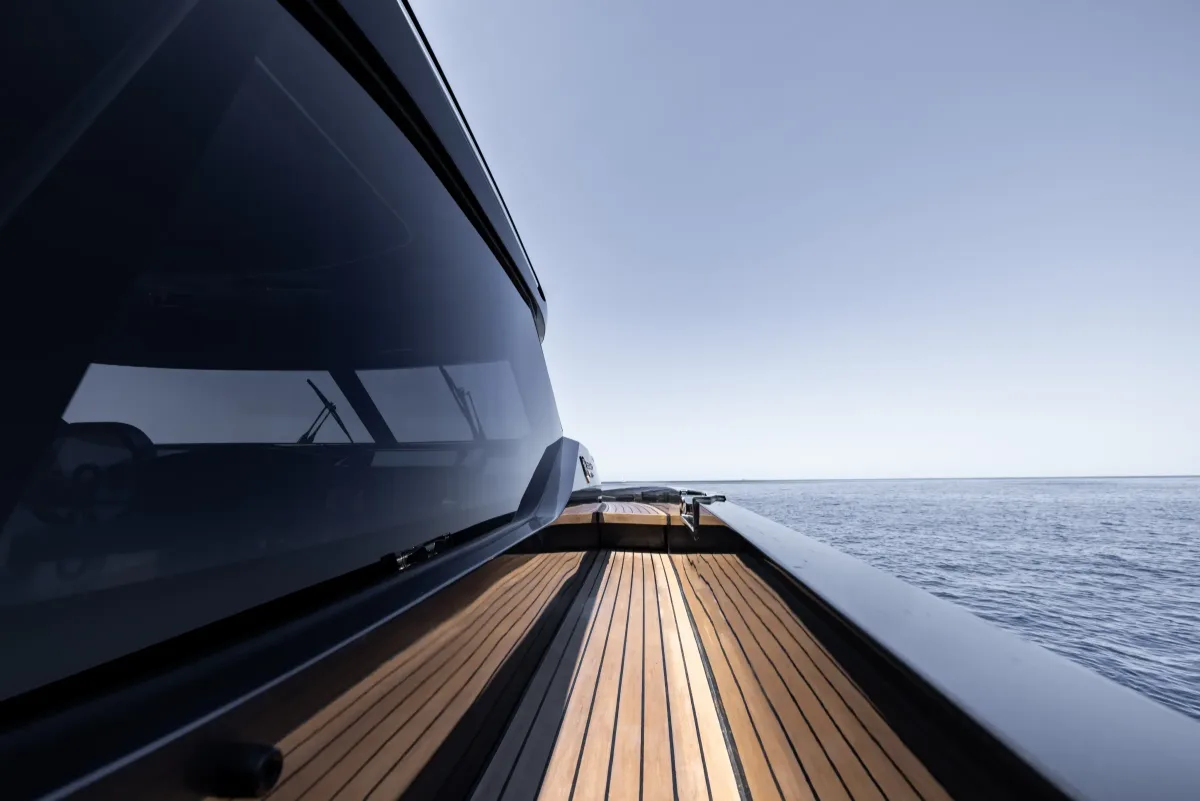
For most owners of a 40 to 60 ft day yacht or weekender, Flexiteek is the practical choice: it looks like teak, needs far less care and avoids questions about hardwood sourcing. Natural teak still has a feel and patina that no synthetic fully matches, and some owners will always prefer it. Bekkers Yachts fits a Flexiteek deck on the AZUR 45HT, so this article explains the trade-offs honestly.

What each deck actually is

Natural teak is a tropical hardwood, valued on boats for centuries because it is dense, oily and resistant to rot. On modern yachts it is usually laid as thin planks bonded to the deck, with flexible caulking in the seams.

Flexiteek is a synthetic teak decking system. It is made from a plastic-based compound, produced in planks that are welded into panels, and bonded to the deck. It is designed to copy the look of laid teak, including the seams, and is available in several colours.

Both can look excellent on a well-built yacht. The difference lies in how they age, how they feel and how much attention they ask for.

Side by side

FactorNatural teakFlexiteek
LookReal wood grain, silvers naturally unless maintainedEven, consistent teak look in a chosen colour
MaintenanceRegular cleaning; recaulking and sanding over the yearsTypically water and mild soap; no oiling or sanding
Heat in sunCan get warm, especially when oiled or darkCan get warm; darker colours typically hotter
GripGood when wet, especially when weatheredTextured surface designed for grip when wet
AgeingWears thinner with each sandingWears slowly; does not need sanding
SustainabilityDepends heavily on sourcingNo tropical hardwood; plastic-based material
Cost classTypically the more expensive optionTypically less expensive than premium teak

Maintenance

This is where the two differ most.

A natural teak deck typically needs washing with fresh water and a gentle cleaner, using a soft brush across the grain. Harsh scrubbing removes soft wood and shortens deck life. Over the years, seams may need recaulking, and the deck may be lightly sanded to restore a smooth surface. Each sanding removes material, so a teak deck has a finite life before it needs replacing.

Flexiteek is typically cleaned with water and a mild soap. It does not need oiling, sealing or sanding to keep its look. Spills such as wine, sun cream or grease can usually be cleaned off without leaving permanent stains if dealt with promptly. For owners who use their yacht for days out and short weekends, and who would rather spend that time on the water, this is a real advantage.

For more on keeping an aluminium yacht in good condition, see aluminium yacht maintenance and yacht running costs.

Heat underfoot

Any deck in the Mediterranean sun in August will get warm. Natural teak is often described as staying comfortable, but in practice it also heats up, particularly when freshly oiled or darker in tone.

Synthetic decks can feel warmer than weathered teak in strong sun, and colour makes a clear difference. Lighter shades typically stay cooler than dark ones. If you plan to cruise mostly in hot climates, it is worth choosing a lighter Flexiteek colour and planning shade. The AZUR 45HT, for example, has an aluminium hardtop, a shaded lounge and an electric sun awning. Our guide to the best cruising grounds for a day yacht gives more context.

Grip and safety

Both materials offer good grip when wet, which is the main reason teak became the classic deck choice. Weathered natural teak has a slightly raised grain that grips bare feet well. Flexiteek has a textured surface designed to stay safe when wet. In daily use on a day yacht, with swimming, showering and boarding from the water, both perform well when kept clean.

Sustainability

High-grade teak is a slow-growing tropical hardwood. Its sourcing has come under increasing scrutiny, and regulations in Europe and elsewhere require builders to show that timber comes from legal sources. Plantation teak is available, but its quality and appearance can differ from old-growth timber.

Flexiteek avoids tropical hardwood altogether. It is, however, a plastic-based product, so it is not without its own footprint. If sustainability is a key part of your decision, ask the yard about current material specifications and end-of-life options, as manufacturers' details can change over time.

Cost

We do not publish separate prices for deck options. As a general industry pattern, a quality synthetic deck is typically less expensive to install than premium natural teak, and lower maintenance also reduces running costs over the years. The final figure depends on deck area, layout and finish. The yard will confirm this in your quote.

Why Bekkers Yachts uses Flexiteek

Bekkers Yachts builds aluminium day yachts and weekenders by hand in Heusden, on the river Maas. The AZUR 45HT is specified with a Flexiteek deck, combined with two sun beds, a shaded lounge, an outdoor galley and a full-size outdoor shower. These are spaces used barefoot, wet and often, so a deck that stays neat with little effort suits the way these yachts are used.

The yard's philosophy is short: no mass production, no fibreglass hull, no restrictions. If you have a strong preference for a particular deck colour or finish, discuss it during specification. See Bespoke and the configurator to start.

Frequently asked questions

Is Flexiteek the same as real teak?

No. Flexiteek is a synthetic decking system designed to look like laid teak. It contains no wood, does not need oiling or sanding, and keeps a consistent colour.

Does Flexiteek get hotter than teak?

In strong sun, synthetic decks can feel warmer than weathered natural teak, and darker colours typically get hotter. Choosing a lighter shade and planning shade on board helps a great deal.

How do you clean a Flexiteek deck?

Typically with fresh water, a mild soap and a soft brush. Stains are easiest to remove when dealt with promptly. Follow the manufacturer's care guidance for specific products.

How long does a natural teak deck last?

It depends on the thickness of the planks, how it is cleaned and how often it is sanded. Each sanding removes material, so even a well-kept teak deck will eventually need replacing.

Which deck does Bekkers Yachts fit?

The AZUR 45HT comes with a Flexiteek deck. If you are considering another deck finish or colour, ask the yard during specification.

Is synthetic teak more sustainable?

It avoids the use of tropical hardwood, which is its main environmental advantage. It is plastic-based, so ask about end-of-life options if this is important to you.
Talk to the yard about your deck and finish

The yard replies personally within one working day. Call +31 (0)416 768 038 or email welcome@bekkersyachts.com.

Contact the yard

We use functional cookies to make this site work and, with your consent, analytics cookies to improve it. Read our cookie policy.

Build and design

Flexiteek vs natural teak: which deck is right for you?

Leon Bekkers, founder of Bekkers YachtsBy Leon Bekkers, founder
Flexiteek vs natural teak: which deck is right for you?, Bekkers Yachts

For most owners of a 40 to 60 ft day yacht or weekender, Flexiteek is the practical choice: it looks like teak, needs far less care and avoids questions about hardwood sourcing. Natural teak still has a feel and patina that no synthetic fully matches, and some owners will always prefer it. Bekkers Yachts fits a Flexiteek deck on the AZUR 45HT, so this article explains the trade-offs honestly.

What each deck actually is

Natural teak is a tropical hardwood, valued on boats for centuries because it is dense, oily and resistant to rot. On modern yachts it is usually laid as thin planks bonded to the deck, with flexible caulking in the seams.

Flexiteek is a synthetic teak decking system. It is made from a plastic-based compound, produced in planks that are welded into panels, and bonded to the deck. It is designed to copy the look of laid teak, including the seams, and is available in several colours.

Both can look excellent on a well-built yacht. The difference lies in how they age, how they feel and how much attention they ask for.

Side by side

FactorNatural teakFlexiteek
LookReal wood grain, silvers naturally unless maintainedEven, consistent teak look in a chosen colour
MaintenanceRegular cleaning; recaulking and sanding over the yearsTypically water and mild soap; no oiling or sanding
Heat in sunCan get warm, especially when oiled or darkCan get warm; darker colours typically hotter
GripGood when wet, especially when weatheredTextured surface designed for grip when wet
AgeingWears thinner with each sandingWears slowly; does not need sanding
SustainabilityDepends heavily on sourcingNo tropical hardwood; plastic-based material
Cost classTypically the more expensive optionTypically less expensive than premium teak

Maintenance

This is where the two differ most.

A natural teak deck typically needs washing with fresh water and a gentle cleaner, using a soft brush across the grain. Harsh scrubbing removes soft wood and shortens deck life. Over the years, seams may need recaulking, and the deck may be lightly sanded to restore a smooth surface. Each sanding removes material, so a teak deck has a finite life before it needs replacing.

Flexiteek is typically cleaned with water and a mild soap. It does not need oiling, sealing or sanding to keep its look. Spills such as wine, sun cream or grease can usually be cleaned off without leaving permanent stains if dealt with promptly. For owners who use their yacht for days out and short weekends, and who would rather spend that time on the water, this is a real advantage.

For more on keeping an aluminium yacht in good condition, see aluminium yacht maintenance and yacht running costs.

Heat underfoot

Any deck in the Mediterranean sun in August will get warm. Natural teak is often described as staying comfortable, but in practice it also heats up, particularly when freshly oiled or darker in tone.

Synthetic decks can feel warmer than weathered teak in strong sun, and colour makes a clear difference. Lighter shades typically stay cooler than dark ones. If you plan to cruise mostly in hot climates, it is worth choosing a lighter Flexiteek colour and planning shade. The AZUR 45HT, for example, has an aluminium hardtop, a shaded lounge and an electric sun awning. Our guide to the best cruising grounds for a day yacht gives more context.

Grip and safety

Both materials offer good grip when wet, which is the main reason teak became the classic deck choice. Weathered natural teak has a slightly raised grain that grips bare feet well. Flexiteek has a textured surface designed to stay safe when wet. In daily use on a day yacht, with swimming, showering and boarding from the water, both perform well when kept clean.

Sustainability

High-grade teak is a slow-growing tropical hardwood. Its sourcing has come under increasing scrutiny, and regulations in Europe and elsewhere require builders to show that timber comes from legal sources. Plantation teak is available, but its quality and appearance can differ from old-growth timber.

Flexiteek avoids tropical hardwood altogether. It is, however, a plastic-based product, so it is not without its own footprint. If sustainability is a key part of your decision, ask the yard about current material specifications and end-of-life options, as manufacturers' details can change over time.

Cost

We do not publish separate prices for deck options. As a general industry pattern, a quality synthetic deck is typically less expensive to install than premium natural teak, and lower maintenance also reduces running costs over the years. The final figure depends on deck area, layout and finish. The yard will confirm this in your quote.

Why Bekkers Yachts uses Flexiteek

Bekkers Yachts builds aluminium day yachts and weekenders by hand in Heusden, on the river Maas. The AZUR 45HT is specified with a Flexiteek deck, combined with two sun beds, a shaded lounge, an outdoor galley and a full-size outdoor shower. These are spaces used barefoot, wet and often, so a deck that stays neat with little effort suits the way these yachts are used.

The yard's philosophy is short: no mass production, no fibreglass hull, no restrictions. If you have a strong preference for a particular deck colour or finish, discuss it during specification. See Bespoke and the configurator to start.

Frequently asked questions

Is Flexiteek the same as real teak?

No. Flexiteek is a synthetic decking system designed to look like laid teak. It contains no wood, does not need oiling or sanding, and keeps a consistent colour.

Does Flexiteek get hotter than teak?

In strong sun, synthetic decks can feel warmer than weathered natural teak, and darker colours typically get hotter. Choosing a lighter shade and planning shade on board helps a great deal.

How do you clean a Flexiteek deck?

Typically with fresh water, a mild soap and a soft brush. Stains are easiest to remove when dealt with promptly. Follow the manufacturer's care guidance for specific products.

How long does a natural teak deck last?

It depends on the thickness of the planks, how it is cleaned and how often it is sanded. Each sanding removes material, so even a well-kept teak deck will eventually need replacing.

Which deck does Bekkers Yachts fit?

The AZUR 45HT comes with a Flexiteek deck. If you are considering another deck finish or colour, ask the yard during specification.

Is synthetic teak more sustainable?

It avoids the use of tropical hardwood, which is its main environmental advantage. It is plastic-based, so ask about end-of-life options if this is important to you.

Talk to the yard about your deck and finish

The yard replies personally within one working day. Call +31 (0)416 768 038 or email welcome@bekkersyachts.com.

Contact the yard

We use functional cookies to make this site work and, with your consent, analytics cookies to improve it. Read our cookie policy.