



Buying a yacht

CE category B explained for day yachts

Leon Bekkers, founder of Bekkers YachtsBy Leon Bekkers, founder
CE category B explained for day yachts, Bekkers Yachts

CE category B means a boat is designed for wind up to and including Beaufort 8 and significant wave heights up to and including 4 m. It is the second highest of the four design categories under the EU Recreational Craft Directive. The Bekkers AZUR 45HT, a 13.5 m aluminium weekender, is certified category B, which places it well above what most day yachts are asked to handle in normal use.

What the CE mark on a boat means

Every new recreational boat between 2.5 m and 24 m sold in the European Economic Area must comply with the Recreational Craft Directive, currently Directive 2013/53/EU. Compliance is shown with the CE mark and a builder's plate. The plate lists the design category, the maximum number of people, the maximum load and, for motor boats, the maximum engine power.

The design category is the part most buyers ask about. It describes the wind and sea conditions the boat is designed for, based on its stability, buoyancy, structure, freeboard and watertightness.

The four design categories

CategoryWind (Beaufort)Significant wave heightIn plain terms
AAbove 8Above 4 mExtended voyages where severe conditions can occur, excluding abnormal conditions such as hurricanes
BUp to and including 8Up to and including 4 mOffshore passages and coastal cruising in demanding conditions
CUp to and including 6Up to and including 2 mCoastal waters, large bays, estuaries, lakes and rivers
DUp to and including 4Up to and including 0.3 m, with occasional waves of 0.5 mSheltered waters such as small lakes, rivers and canals

Earlier versions of the directive also used descriptive labels, such as "offshore" for category B. The current directive defines the categories by wind and wave limits only.

What Beaufort 8 and 4 m waves actually mean

Beaufort 8

Beaufort 8 is classed as a gale. It corresponds to sustained wind speeds of roughly 34 to 40 knots. At sea, it brings moderately high waves, breaking crests and foam blown in well-marked streaks. Very few owners of day yachts or weekenders would choose to be out in these conditions.

Significant wave height

Significant wave height is a statistical measure. It is the average height of the highest third of the waves. In a sea state with a significant wave height of 4 m, individual waves will typically be higher than 4 m, and some may be much higher. This is why a 4 m limit describes a serious sea, not a calm one with the occasional large wave.

What category B does not mean

A design category is an engineering assessment. It is not a licence, a weather forecast or a safe-use rating for every situation.

  • It does not mean the boat should be taken out in a gale.
  • It does not replace the skipper's judgement, experience or a proper weather check.
  • It does not say anything about comfort. A boat can be designed for a sea state that would be very unpleasant to be on board in.
  • It does not cover crew skills, equipment or local regulations, which vary by country.

In practice, a higher design category gives a margin. The conditions you choose to go out in should sit well inside the boat's limits, so that an unexpected change in the weather is something the boat can handle comfortably.

Why category B is relevant for day yachts

Smaller day boats and open boats are often certified category C, which is suitable for coastal use in moderate conditions. Category B goes a step further. For an owner, the difference shows up in three ways.

Coastal passages with a margin

Day yachts are often used for longer runs along a coast, between islands or across open stretches of water. Conditions can build during the day. A category B boat is designed with more reserve for that.

Use as a chase tender

Some owners use a day yacht alongside a larger yacht, as a chase tender that follows the mothership between anchorages. That can mean open-water passages in whatever the weather is doing. Read more in superyacht chase tender and chase tender.

Confidence and resale

A higher design category is a clear, regulated reference point. Buyers and brokers recognise it, and it can support the yacht's appeal on the second-hand market.

What category B means for the AZUR 45

The AZUR 45HT is certified CE / RCD category B. Its key data:

SpecificationAZUR 45HT
Length overall13.5 m / 44.29 ft
Beam4.32 m
Draught0.79 m
Maximum displacement16,600 kg
HullAluminium, hard chine
Engines2x Volvo Penta IPS 600 (2x 440 hp) entry package, up to IPS 800 (2x 600 hp)
Speed30+ knots, depending on engines
Fuel1,240 l
CE design categoryB

Several elements of the design support category B. The hull is aluminium and built by hand, with hull engineering by Navyk. Aluminium gives a stiff, strong structure for its weight. The hard chine hull form is common on planing motor yachts. A maximum displacement of 16,600 kg gives the yacht a solid presence in a sea.

Ask the yard for the design category of the Carib 64HT and the Beachclub 40.

The yard's founder, Leon Bekkers, comes from the superyacht industry, where he supplied stainless steel work to leading Dutch and German yards. The AZUR 45 is built to that standard of finish, which Motor Boat & Yachting noted in its first look, praising fit and finish as exceptional for a 45-footer.

Checking the category on any boat

If you are comparing yachts, check the design category on the builder's plate and in the Declaration of Conformity, which the builder must provide. Make sure the category applies to the exact version and engine configuration you are considering. Our article on aluminium vs GRP and the yacht comparison can help you weigh other differences.

Frequently asked questions

What does CE category B mean?

CE category B means a boat is designed for wind up to and including Beaufort 8 and significant wave heights up to and including 4 m. It is the second highest of the four design categories under the EU Recreational Craft Directive.

Is category B safe for crossing open water?

Category B boats are designed for offshore passages in demanding conditions. Safety still depends on the skipper, the crew, the equipment and the weather. Choose conditions well inside the boat's design limits.

What is the difference between category B and category C?

Category C covers wind up to Beaufort 6 and significant waves up to 2 m. Category B covers up to Beaufort 8 and waves up to 4 m, so it is designed for considerably more demanding conditions.

Is the AZUR 45 category A?

No. The AZUR 45HT is certified category B. Category A is intended for extended voyages in conditions beyond Beaufort 8 and 4 m waves, which is not the purpose of a day yacht or weekender.

Where can I find the design category of a boat?

On the builder's plate fitted to the boat and in the Declaration of Conformity supplied by the builder. Both are required under the Recreational Craft Directive.
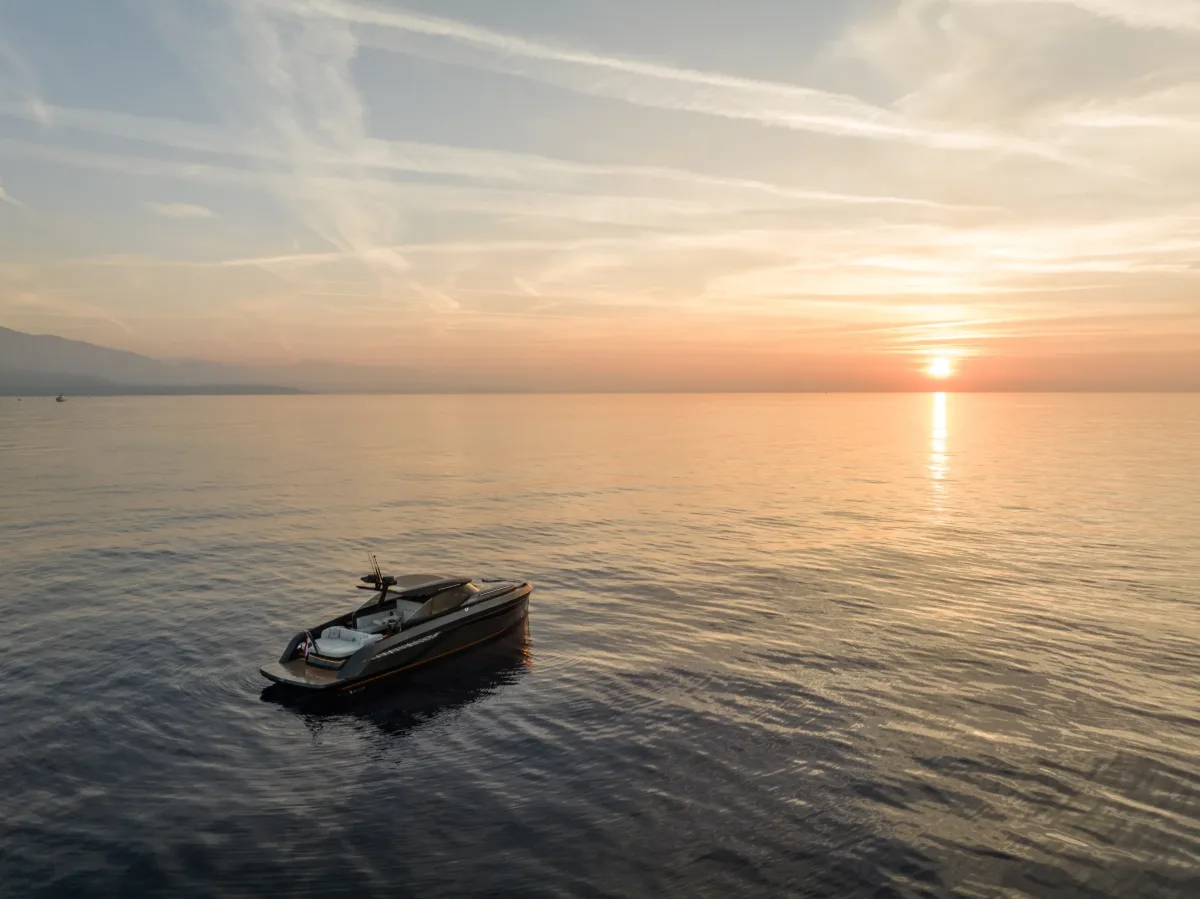
Request a sea trial and feel the AZUR 45 in open water

The yard replies personally within one working day. Call +31 (0)416 768 038 or email welcome@bekkersyachts.com.

Get in touch

We use functional cookies to make this site work and, with your consent, analytics cookies to improve it. Read our cookie policy.

Buying a yacht

CE category B explained for day yachts

Leon Bekkers, founder of Bekkers YachtsBy Leon Bekkers, founder
CE category B explained for day yachts, Bekkers Yachts

CE category B means a boat is designed for wind up to and including Beaufort 8 and significant wave heights up to and including 4 m. It is the second highest of the four design categories under the EU Recreational Craft Directive. The Bekkers AZUR 45HT, a 13.5 m aluminium weekender, is certified category B, which places it well above what most day yachts are asked to handle in normal use.

What the CE mark on a boat means

Every new recreational boat between 2.5 m and 24 m sold in the European Economic Area must comply with the Recreational Craft Directive, currently Directive 2013/53/EU. Compliance is shown with the CE mark and a builder's plate. The plate lists the design category, the maximum number of people, the maximum load and, for motor boats, the maximum engine power.

The design category is the part most buyers ask about. It describes the wind and sea conditions the boat is designed for, based on its stability, buoyancy, structure, freeboard and watertightness.

The four design categories

CategoryWind (Beaufort)Significant wave heightIn plain terms
AAbove 8Above 4 mExtended voyages where severe conditions can occur, excluding abnormal conditions such as hurricanes
BUp to and including 8Up to and including 4 mOffshore passages and coastal cruising in demanding conditions
CUp to and including 6Up to and including 2 mCoastal waters, large bays, estuaries, lakes and rivers
DUp to and including 4Up to and including 0.3 m, with occasional waves of 0.5 mSheltered waters such as small lakes, rivers and canals

Earlier versions of the directive also used descriptive labels, such as "offshore" for category B. The current directive defines the categories by wind and wave limits only.

What Beaufort 8 and 4 m waves actually mean

Beaufort 8

Beaufort 8 is classed as a gale. It corresponds to sustained wind speeds of roughly 34 to 40 knots. At sea, it brings moderately high waves, breaking crests and foam blown in well-marked streaks. Very few owners of day yachts or weekenders would choose to be out in these conditions.

Significant wave height

Significant wave height is a statistical measure. It is the average height of the highest third of the waves. In a sea state with a significant wave height of 4 m, individual waves will typically be higher than 4 m, and some may be much higher. This is why a 4 m limit describes a serious sea, not a calm one with the occasional large wave.

What category B does not mean

A design category is an engineering assessment. It is not a licence, a weather forecast or a safe-use rating for every situation.

  • It does not mean the boat should be taken out in a gale.
  • It does not replace the skipper's judgement, experience or a proper weather check.
  • It does not say anything about comfort. A boat can be designed for a sea state that would be very unpleasant to be on board in.
  • It does not cover crew skills, equipment or local regulations, which vary by country.

In practice, a higher design category gives a margin. The conditions you choose to go out in should sit well inside the boat's limits, so that an unexpected change in the weather is something the boat can handle comfortably.

Why category B is relevant for day yachts

Smaller day boats and open boats are often certified category C, which is suitable for coastal use in moderate conditions. Category B goes a step further. For an owner, the difference shows up in three ways.

Coastal passages with a margin

Day yachts are often used for longer runs along a coast, between islands or across open stretches of water. Conditions can build during the day. A category B boat is designed with more reserve for that.

Use as a chase tender

Some owners use a day yacht alongside a larger yacht, as a chase tender that follows the mothership between anchorages. That can mean open-water passages in whatever the weather is doing. Read more in superyacht chase tender and chase tender.

Confidence and resale

A higher design category is a clear, regulated reference point. Buyers and brokers recognise it, and it can support the yacht's appeal on the second-hand market.

What category B means for the AZUR 45

The AZUR 45HT is certified CE / RCD category B. Its key data:

SpecificationAZUR 45HT
Length overall13.5 m / 44.29 ft
Beam4.32 m
Draught0.79 m
Maximum displacement16,600 kg
HullAluminium, hard chine
Engines2x Volvo Penta IPS 600 (2x 440 hp) entry package, up to IPS 800 (2x 600 hp)
Speed30+ knots, depending on engines
Fuel1,240 l
CE design categoryB

Several elements of the design support category B. The hull is aluminium and built by hand, with hull engineering by Navyk. Aluminium gives a stiff, strong structure for its weight. The hard chine hull form is common on planing motor yachts. A maximum displacement of 16,600 kg gives the yacht a solid presence in a sea.

Ask the yard for the design category of the Carib 64HT and the Beachclub 40.

The yard's founder, Leon Bekkers, comes from the superyacht industry, where he supplied stainless steel work to leading Dutch and German yards. The AZUR 45 is built to that standard of finish, which Motor Boat & Yachting noted in its first look, praising fit and finish as exceptional for a 45-footer.

Checking the category on any boat

If you are comparing yachts, check the design category on the builder's plate and in the Declaration of Conformity, which the builder must provide. Make sure the category applies to the exact version and engine configuration you are considering. Our article on aluminium vs GRP and the yacht comparison can help you weigh other differences.

Frequently asked questions

What does CE category B mean?

CE category B means a boat is designed for wind up to and including Beaufort 8 and significant wave heights up to and including 4 m. It is the second highest of the four design categories under the EU Recreational Craft Directive.

Is category B safe for crossing open water?

Category B boats are designed for offshore passages in demanding conditions. Safety still depends on the skipper, the crew, the equipment and the weather. Choose conditions well inside the boat's design limits.

What is the difference between category B and category C?

Category C covers wind up to Beaufort 6 and significant waves up to 2 m. Category B covers up to Beaufort 8 and waves up to 4 m, so it is designed for considerably more demanding conditions.

Is the AZUR 45 category A?

No. The AZUR 45HT is certified category B. Category A is intended for extended voyages in conditions beyond Beaufort 8 and 4 m waves, which is not the purpose of a day yacht or weekender.

Where can I find the design category of a boat?

On the builder's plate fitted to the boat and in the Declaration of Conformity supplied by the builder. Both are required under the Recreational Craft Directive.

Request a sea trial and feel the AZUR 45 in open water

The yard replies personally within one working day. Call +31 (0)416 768 038 or email welcome@bekkersyachts.com.

We use functional cookies to make this site work and, with your consent, analytics cookies to improve it. Read our cookie policy.